Roi Et
Roi Et (Thai: ร้อยเอ็ด, pronounced [rɔ́ːj ʔèt]; Northeastern Thai: ร้อยเอ็ด, pronounced [lɔ᷆ːjʔět]) is one of Thailand's seventy-six provinces (changwat) lies in central northeastern Thailand also called Isan. Neighboring provinces are (from north clockwise) Kalasin, Mukdahan, Yasothon, Sisaket, Surin, and Maha Sarakham.

Roi Et province does not have an official national park. Instead, protected nature and wildlife are managed through non-hunting areas and forest parks. The primary destination fulfilling this role is the Tham Pha Nam Thip Non-Hunting Area (incorporating Pha Nam Yoi Forest Park) in Nong Phok District.
Key Nature & Wildlife Sites in Roi Et
- Tham Pha Nam Thip Non-Hunting Area: Located in Nong Phok District; features rocky cliffs, seasonal springs, and the expansive Northeastern Thai Literary Botanical Garden.
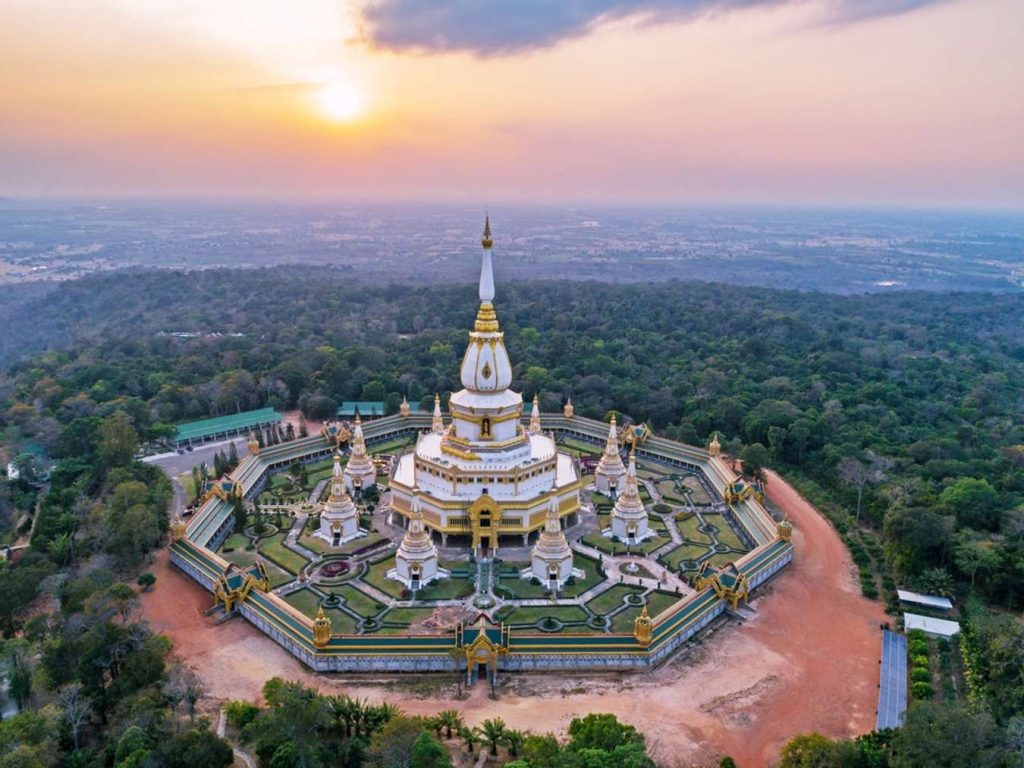
- Phu Pha Nam Yoi Forest Park: Situated inside the same protected high-forest landscape in Nong Phok; home to Wat Phra Maha Chedi Chai Mongkol, a massive hilltop golden pagoda overlooking the canopy.
- Tham Soda: A quiet cave and forested monastic area located within the regional protected zone.
Gesneriaceae
In Roi Et Province, Thailand, botanical surveys have recorded Somrania albiflora (Thai vernacular name: Khao Phromachan, ขาวพรหมจรรย์), a notable species belonging to the African violet and gloxinia family (Gesneriaceae), collected specifically in the Pathumrat district.
Key details regarding this finding include:
- Taxon: Somrania albiflora D.J.Middleton
- Family: Gesneriaceae
- Location in Roi Et: Pathumrat District
- Context: Somrania is a genus of Gesneriaceae centered in and originally described from Thailand.
🔄 to know Gesneriaceae


ไม่มีความคิดเห็น:
แสดงความคิดเห็น